
Brampton Rental Licensing: Everything Landlords Need to Know
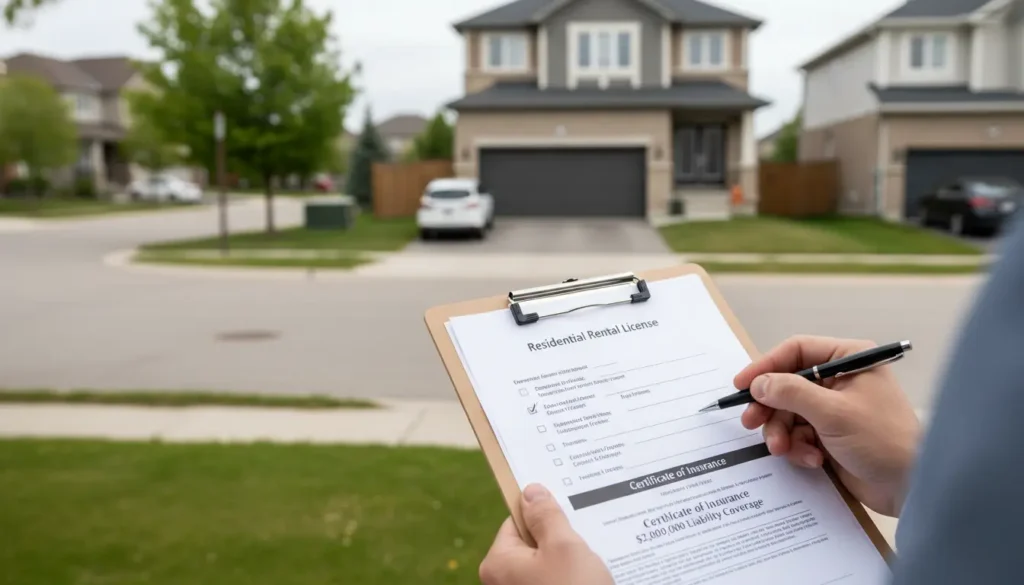
For property owners in Brampton, the landscape of residential renting has shifted significantly. The City of Brampton started the Residential Rental Licensing (RRL) pilot program. This program ensures rental units follow safety and community standards. This initiative helps protect tenants and keep neighborhoods stable. But it also adds new responsibilities for landlords.
Navigating Brampton’s rental licensing bylaw can be tricky. Recent updates will take effect in 2026, adding to the confusion. Now, compliance is a must. It doesn’t matter if you’re a seasoned investor or a homeowner in a basement suite. This guide breaks down exactly who needs a license, the requirements you must meet, and the steps to secure your license without facing heavy fines.
Who needs a rental license in Brampton?
The RRL program focuses on smaller rental operations. It does not target large apartment high-rises. If you own a rental property with one to four units in Brampton, you must get a license.
As of January 1, 2026, this need is citywide, covering all wards. The program is currently scheduled to run until December 31, 2028.
You fall under the Brampton rental licensing requirements if you own:
- Single Dwelling Units: A whole house rented out with no more than one unit.
- Two-Unit Dwellings: A main house plus one or more residential units (ARUs), such as a basement apartment.
- Multi-Unit Residential Dwellings: This category includes properties with more than one ARU. Examples are triplexes, fourplexes, and garden suites.
Basement Apartment Licensing in Brampton
A common misconception is that owner-occupied homes are exempt. This is incorrect. If you live in the main house and rent a legal basement in Brampton, you’re a landlord in this program. You must register and license your secondary suite, even with one tenant. We need this for legal operation.
Brampton Rental License Requirements
To get your license, just show that your property is safe, insured, and well-managed. The city has introduced specific prerequisites to ensure all operators have a baseline understanding of their obligations.
Landlord Education Module
One new part of the Brampton rental license rules is the Landlord Education Module. Before you can submit your application, you must complete a one-time online learning module.
This module consists of ten questions designed to test your knowledge of minimum operating requirements. The City provides a comprehensive study guide to help you prepare. Once completed, this qualification is linked to your email address for future applications.
Insurance and Documentation
You cannot license a property without proper protection. Brampton landlords must get a rental license and submit a Certificate of Insurance. You must prove you have a minimum of $2 million in liability coverage. This requirement protects the property owner, the tenants, and the neighbors in the event of accidents or emergencies.
Property Standards and Safety
brampton legal basement apartment safety complianceBeyond paperwork, your physical property must meet strict standards. Brampton landlord compliance involves:
- Fire Safety: Maintaining working smoke and carbon monoxide alarms in accordance with the Ontario Fire Code.
- Occupancy Limits: Adhering to the occupancy limits set out in your building permit or fire code to prevent overcrowding.
- Property Maintenance: Taking care of lawn care, snow removal, and garbage storage.
- Legal Parking: Ensuring tenants park only in legal, paved areas—never on grass or across sidewalks.
How to Get a Rental License in Brampton
Applying for the license is a digital-first process. Follow these steps to ensure your application is processed smoothly.
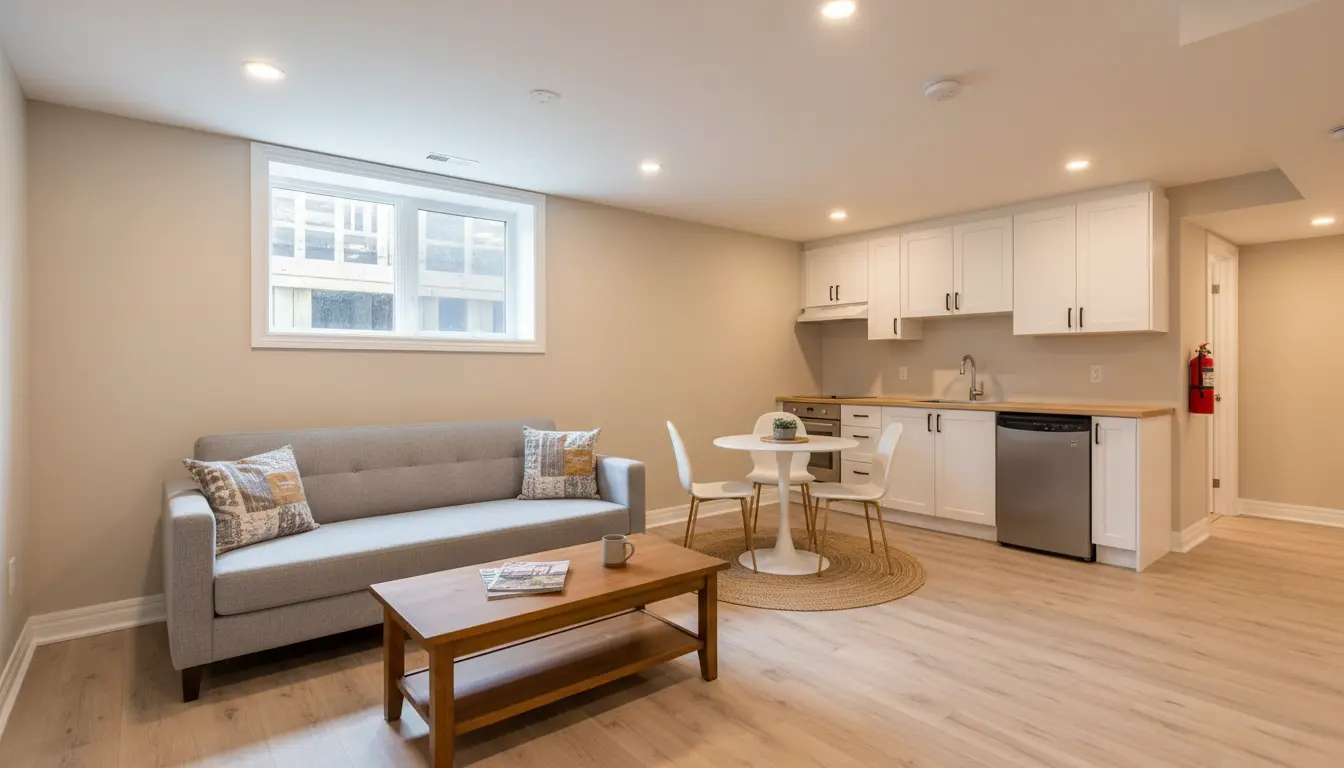
Step 1: Register Your Additional Residential Unit (ARU)
This is the most critical step. You cannot license a unit that doesn’t officially exist. If you rent a basement or garden suite, get it registered as an ARU with the city first. Then, you can apply for the rental license. This confirms the unit complies with the Ontario Building Code and has passed the necessary inspections.
Step 2: Prepare Your Documents
Before logging into the portal, ensure you have your supporting documents ready. This includes your completed Certificate of Insurance and proof that you have finished the Landlord Education Module.
Step 3: Submit the application
Visit the City of Brampton’s online portal to submit your RRL application. You will need to provide consent for the City to verify that your property meets all safety, fire, and maintenance standards.
Note: As of the current pilot program terms, the rental license application is free. The city has waived the fee to encourage widespread compliance.
Step 4: Receive and Post Your License
Once approved, your license will be emailed to you. You are required to post this document in a visible location inside the rental unit where tenants can easily see it.
Consequences of Renting Without a License
The city is taking unlicensed rental Brampton cases seriously. The enforcement approach is designed to penalize non-compliance heavily to discourage illegal rentals that put tenants at risk.
If you are found operating without a license, the financial consequences are immediate:
- Failure to obtain a license: least fine of $750.
- Failure to register an ARU: least fine of $1,000.
- Continued non-compliance: Fines can escalate to $1,500.
However, the fines can go much higher for serious safety breaches. Offences involving illegal construction or significant breaches under the Building Code Act can result in penalties of up to $500,000. Beyond the fines, non-compliance means you cannot legally rent your property, leading to a total loss of rental income.
Summary
The Brampton rental licensing program sets new standards for accountability and safety in the local rental market. While registering your units and completing the education module require initial effort, the process safeguards your investment and ensures tenant safety.
You can apply for free now, so it won’t cost you anything to get compliant. Follow the Brampton landlord compliance guidelines today. This helps you avoid big fines and supports a safer, regulated housing market for all.
Don’t wait start your compliance journey now and protect your rental investment!
Feel free to book a consultation
Do I need a rental license for a basement apartment in Brampton?
Yes. If you rent out a basement apartment, even if you live in the upper portion of the house, you are required to obtain a Residential Rental License. The unit must first be registered as an Additional Residential Unit (ARU).
What documents are required for Brampton rental licensing?
To apply, you need proof of ownership, a completed Certificate of Insurance showing at least $2 million in liability coverage, and confirmation that you have completed the online Landlord Education Module.
How much does a rental license cost in Brampton?
Under the current pilot program, the application fee for the rental license is waived, making it free to apply. However, landlords must still bear the costs of insurance and any necessary property upgrades to meet compliance standards.
What happens if I rent without a license in Brampton?
Operating without a license is illegal. You may face at least a fine of $750 for failing to get a license and $1,000 for failing to register a secondary unit. Continued noncompliance can lead to escalating fines and legal action.
