
GTA Homeowners’ Guide to Below-Grade Entrance — Safety, Income & Peace of Mind
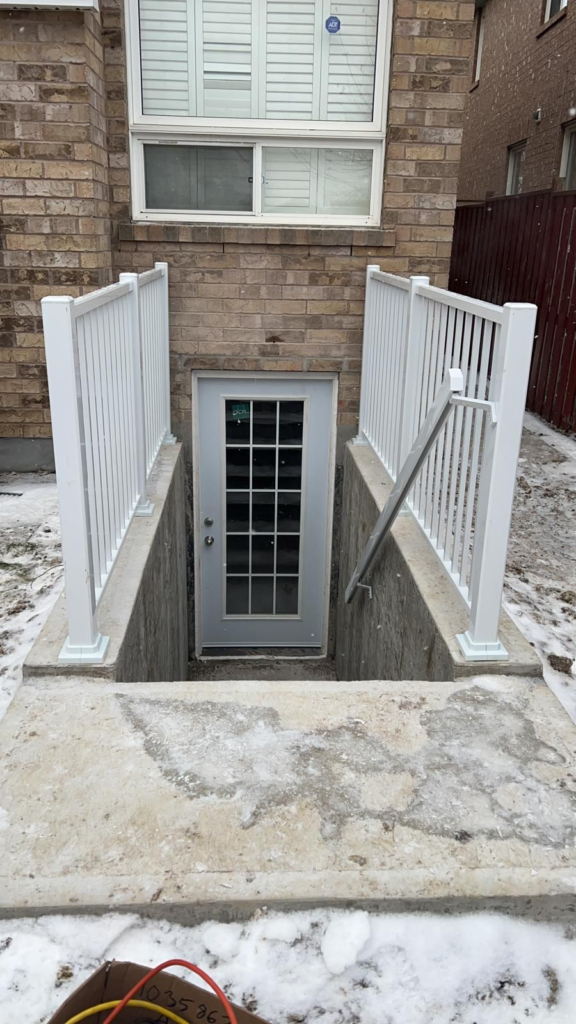
A below-grade entrance is one of the most transformative upgrades a GTA homeowner can make. Whether you’re planning to build a legal basement apartment, improve home safety, or increase property value, this single addition delivers long-term benefits. But before breaking ground, it’s essential to understand the types of entrances available, Ontario’s safety requirements, railing options, and what local regulations mean for your project.
This guide covers everything you need to know—from choosing the right entrance style to unlocking income potential.
What Is a Below-Grade Entrance?
A below-grade entrance is an exterior entry point built below ground level, providing direct access to the basement. Homeowners typically add one for:
- Legal basement apartments
- Private access for in-laws or guests
- Improved emergency egress
- Boosting resale value and rental potential
Ontario’s guidelines for legal secondary units often require a safe, separate entrance.
Source: https://www.ontario.ca/page/add-second-unit-your-house
Types of Below-Grade Entrance
Below-grade entrances come in several structural styles depending on space, soil conditions, and design preference. Here are the four most common types used across GTA homes:
1. Single Wall Entrance
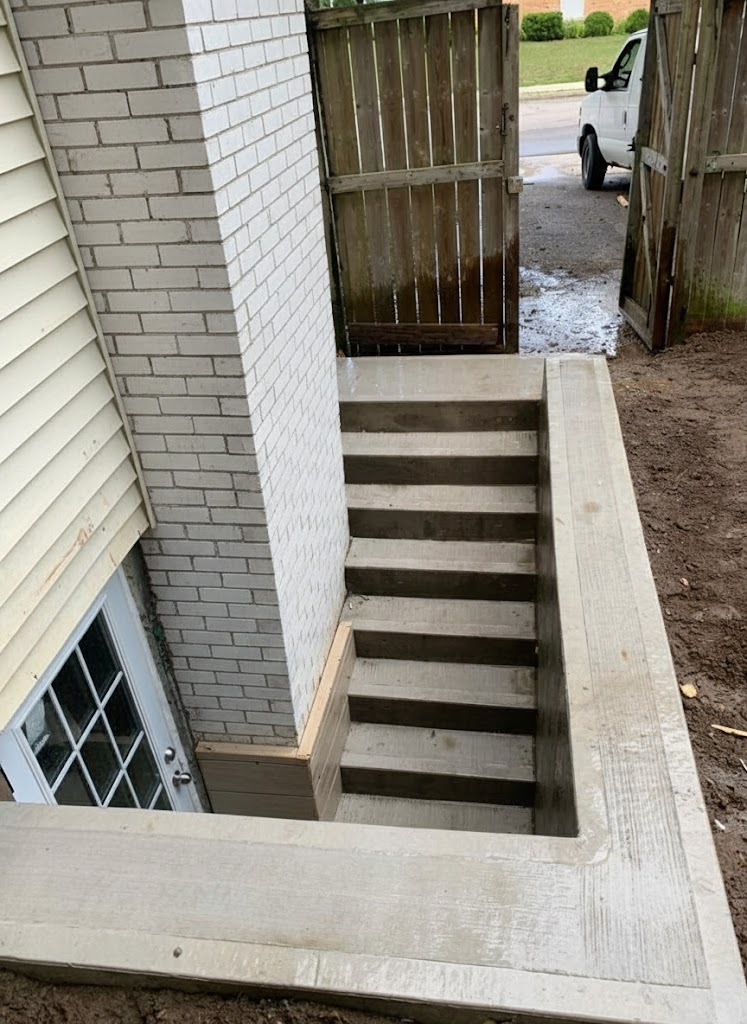
A single wall entrance has one reinforced side wall supporting the staircase, while the house foundation forms the opposite side.
Best For:
- Homes with limited space
- Narrow side yards
Pros:
- Cost-effective
- Faster to construct
- Minimal excavation required
2. Double Wall Entrance
A double wall entrance includes two independent retaining walls built on either side of the staircase.
Best For:
- Homes needing additional structural support
- Properties with shifting or loose soil
Pros:
- Strong and durable
- Ideal for long-term stability
- Better for homes requiring deeper excavation
Consideration:
- Slightly higher cost due to additional materials and engineering
3. Single Landing Entrance
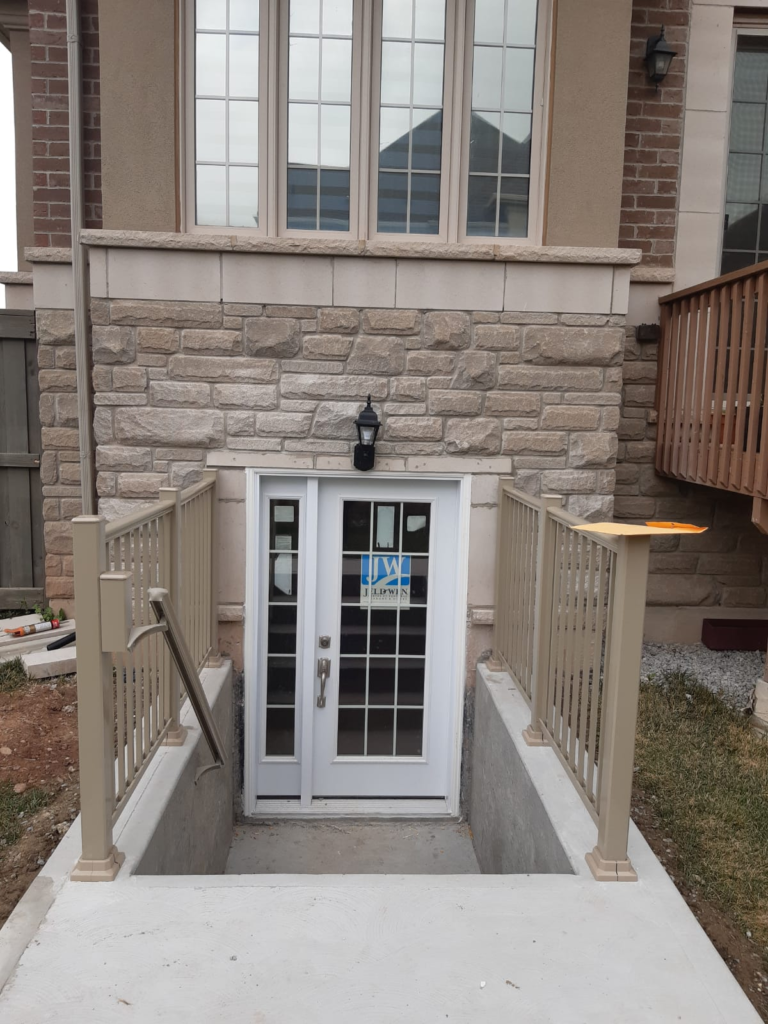
This design includes one intermediate landing between the top of the stairwell and the basement door.
Best For:
- Homes with higher basement ceilings
- Properties that require a break in stair slope
Pros:
- Safer and easier to navigate
- Better water management
- Provides space for railings and lighting
4. Double Landing Entrance
A double landing design features two intermediate landings, providing additional walking space and reducing stair steepness.
Best For:
- Deep basements
- Wider excavation zones
- Homeowners prioritizing safety and aesthetics
Pros:
- Most comfortable staircase flow
- Ideal for seniors, tenants, and families
- High-end appearance
Consideration:
- Requires more excavation and planning
Essential Safety Features (Ontario Requirements)
A below-grade entrance must comply with Ontario Building Code and municipal bylaws.
Source: https://www.ontario.ca/page/building-permits
1. Drainage System
Since these entrances sit below ground level, water management is extremely important.
A proper system includes:
- A floor drain connected to the home’s drainage system
- Correct yard grading
- Waterproofed walls
- Optional trench drains or sump pumps
This prevents flooding—one of the most common issues in poorly designed stairwells.
2. Code-Compliant Stair Dimensions
Ontario Building Code requires:
- Uniform riser heights
- Non-slip treads
- Minimum stair width
- Adequate headroom clearance
These standards are especially important in single and double landing designs.
3. Proper Lighting
Exterior lighting improves safety and visibility—especially during winter months.
4. Fire Safety & Egress
For a legal rental suite:
- The basement door must meet egress requirements
- Proper fire separation must be installed
These rules protect both the homeowner and tenants.
Railing Types for Below-Grade Entrance
Depending on the depth and design of the entrance, railings may be mandatory. Here are the most commonly used types:
1. Metal Pipe Railings (Most Durable)
- Long-lasting
- Weather-resistant
- Simple and modern
2. Wrought Iron Railings
- Decorative
- Strong and customizable
- Premium aesthetic
3. Aluminum Railings
- Lightweight
- Affordable
- Rust-resistant
4. Glass Panel Railings
- Sleek and modern
- Pairs well with landing-style entrances
- Higher cost and requires careful installation
Why a Below-Grade Entrance Matters
1. Safety & Compliance
A legal secondary suite requires a safe, private entrance. This ensures:
- Emergency escape route
- Reduced reliance on interior stairs
- Compliance with OBC
2. Rental Income Potential
In the GTA, a legal basement apartment can generate:
$1,800 to $2,100+ per month depending on the neighbourhood.
A separate entrance significantly increases tenant appeal and long-term rental value.
3. Increased Property Value
Homes with legal basement suites and private entrances attract more buyers and deliver higher resale value.
4. Privacy for Families
Perfect for multigenerational households—adult children, parents, or guests can come and go independently.
Common Mistakes Homeowners Should Avoid
- Poor drainage design leading to water intrusion
- Skipping required building permits
- Incorrect stair dimensions that fail inspection
- Inadequate waterproofing
- Using railing materials unsuitable for Ontario climate
Final Thoughts
A well-built, code-compliant below-grade entrance is one of the smartest investments a GTA homeowner can make. It improves safety, enhances privacy, increases property value, and opens the door—literally—to steady rental income.
