Why Most Basement Renovations Fail Inspection — And How to Avoid That Nightmare
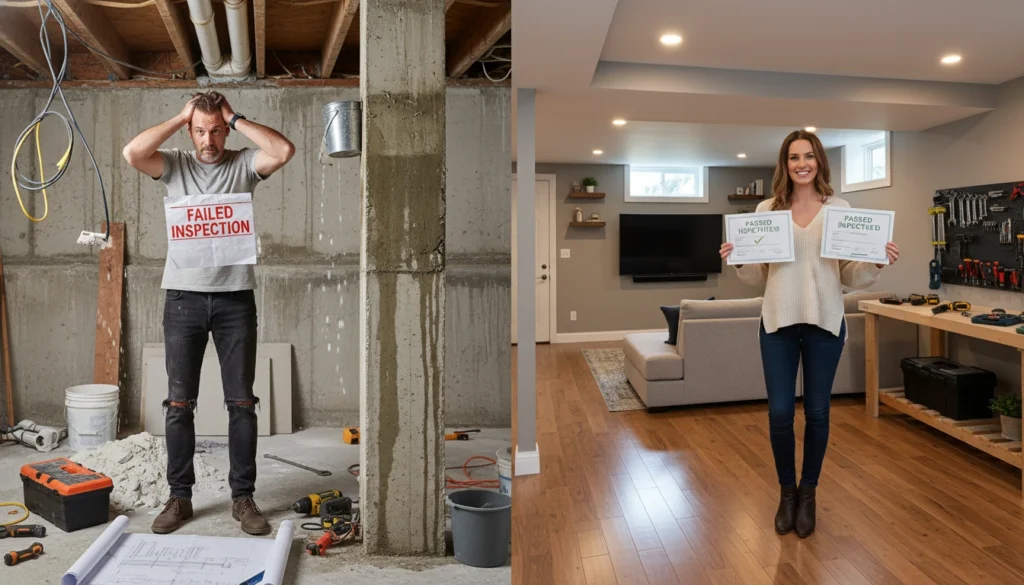
Basement renovations are one of the most popular home upgrades in the GTA. Homeowners invest thousands of dollars expecting more living space, rental income, or increased property value—only to face a harsh reality at inspection time: failure.
A failed inspection doesn’t just delay your project. It can lead to costly rework, permit issues, insurance complications, and in some cases, a basement that can never be legalized. Understanding why most basement renovations fail inspection is the first step toward avoiding that nightmare.
The Most Common Reason: Skipping or Misunderstanding Permits
One of the biggest reasons basement renovations fail inspection is that work begins without proper permits or with permits that don’t match the scope of work.
In Ontario, most basement renovations require a building permit—especially if you are:
- Adding bedrooms
- Creating a secondary suite
- Modifying plumbing, electrical, or structural elements
According to Ontario regulations, permits ensure work complies with the Ontario Building Code (OBC) and protects occupant safety.
Source: https://www.ontario.ca/page/building-permits
Why this causes failure:
- Inspectors compare the built work against approved drawings
- Any unapproved changes can trigger a stop-work order
- Retroactive permits often require demolition to inspect hidden work
How to avoid it:
Apply for permits before construction begins and ensure drawings accurately reflect the final design.
Ceiling Height Issues That Homeowners Overlook
Many homeowners assume any finished basement automatically qualifies as living space. That’s not true.
The Ontario Building Code sets minimum ceiling height requirements for habitable basement areas. Older homes often fall short due to:
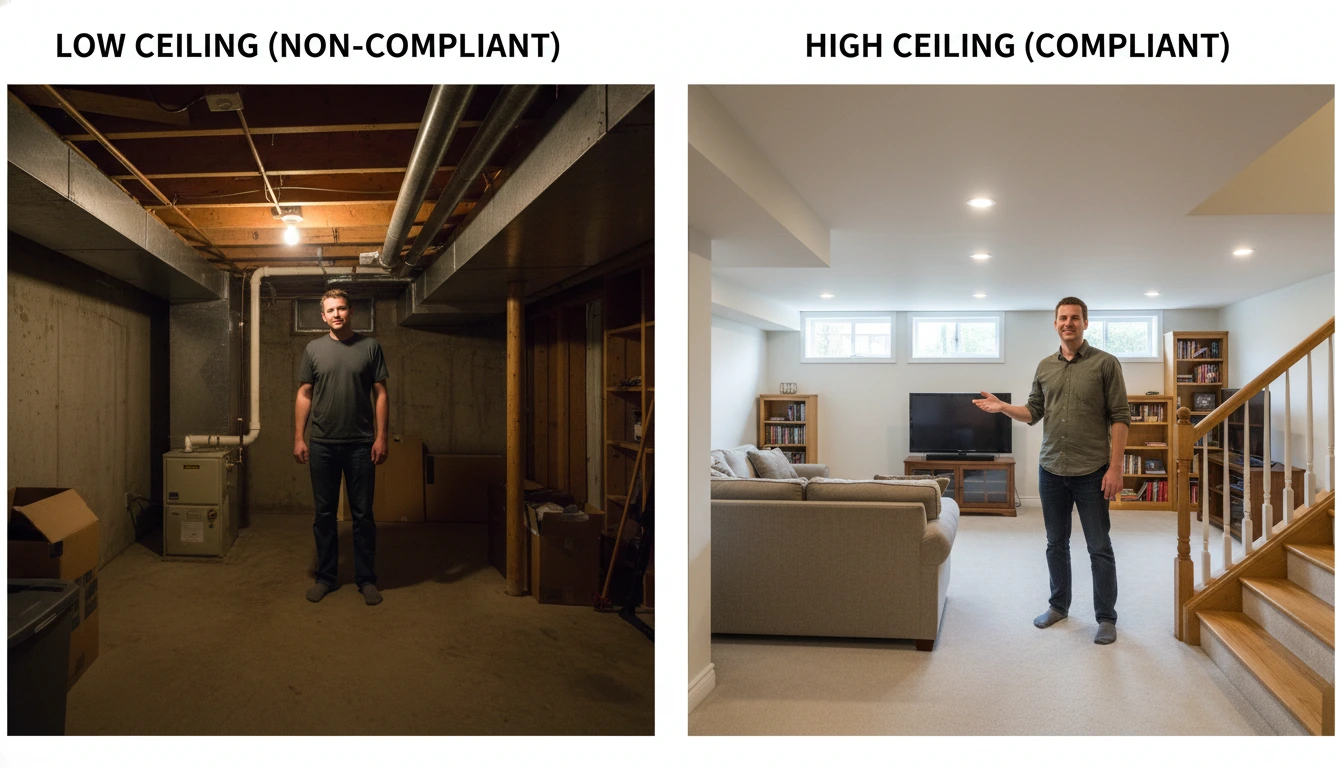
basement ceiling height comparison
- Low foundation walls
- Ductwork and beams reducing headroom
- Drop ceilings installed without consideration for clearance
If the finished ceiling height doesn’t meet code, inspectors may reject the space as habitable—especially for bedrooms or rental units.
How to avoid it:
Measure ceiling heights early. If needed, explore options like duct relocation or underpinning before finishing begins.
Improper or Missing Egress (Exit) Requirements
Another major inspection failure point is egress—safe exit routes in case of emergency.
For legal basement bedrooms or secondary suites, the OBC requires:
- Properly sized egress windows or doors
- Windows that open without tools
- Window wells with adequate clearance and drainage
Without compliant egress, a basement can be deemed unsafe—even if everything else looks perfect.
How to avoid it:
Design exits according to OBC requirements and confirm window sizes, sill heights, and well dimensions before installation.
Fire Separation and Life Safety Failures
Fire safety is one of the most strictly enforced areas during inspection, and also one of the most misunderstood.
Common failures include:
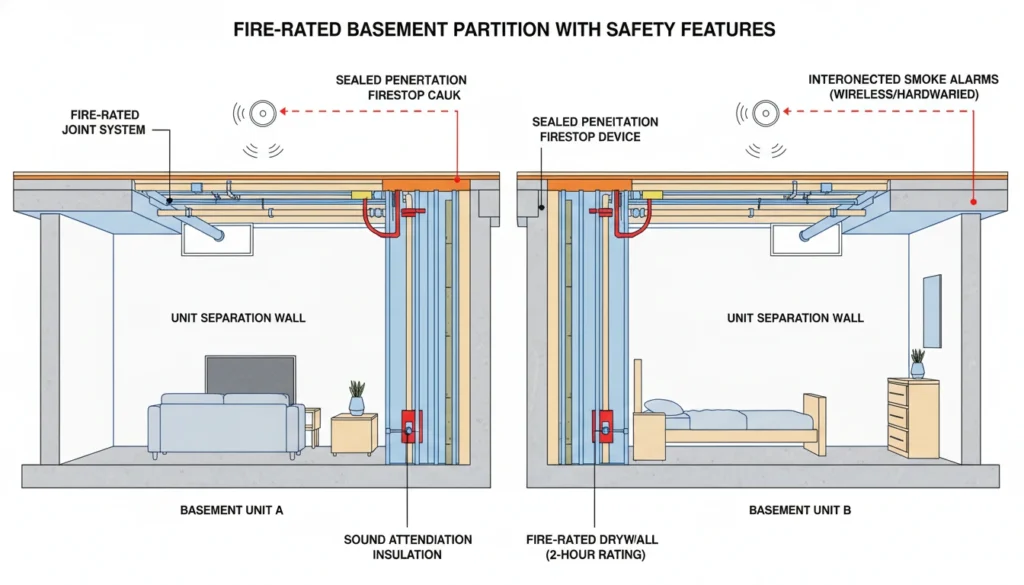
- Missing or improper fire-rated drywall between units
- No fire separation between basement and main floor
- Lack of interconnected smoke and carbon monoxide alarms
Ontario requires specific fire-resistance ratings and alarm placement to protect occupants in multi-unit homes.
Source: https://www.ontario.ca/page/add-second-unit-your-house
How to avoid it:
Use the correct fire-rated assemblies, install interconnected alarms, and ensure all penetrations (ducts, wiring, plumbing) are properly sealed.
Electrical and Plumbing Work Done Without Inspection
Unlicensed or DIY electrical and plumbing work is another common cause of inspection failure.
Inspectors frequently flag:
- Improper wiring methods
- Overloaded circuits
- Missing GFCI/AFCI protection
- Incorrect plumbing venting or drainage slopes
These issues are not just code violations—they are safety hazards.
How to avoid it:
Always use licensed professionals and ensure all required rough-in inspections are completed before walls are closed.
Poor Drainage and Moisture Control
Basements are naturally prone to moisture. Inspectors will fail renovations that show signs of:
- Improper waterproofing
- Missing floor drains near below-grade entrances
- Poor grading directing water toward the foundation
Moisture problems can lead to mold, structural damage, and unsafe living conditions.
How to avoid it:
Install proper drainage systems, waterproof foundation walls, and ensure exterior grading slopes away from the home.
Ignoring Municipal Zoning and Secondary Suite Rules
Even if your basement meets the Ontario Building Code, it can still fail approval due to municipal zoning bylaws.
Common zoning-related issues include:
- Basement apartments not permitted on certain lot types
- Insufficient parking requirements
- Entrance location restrictions
How to avoid it:
Check your municipality’s zoning bylaws early and confirm secondary suites are permitted on your property.
Why Failed Inspections Cost More Than You Think
A failed inspection often leads to:
- Demolition of finished work
- Project delays of weeks or months
- Additional permit and inspection fees
- Reduced resale value
- Insurance complications
In worst cases, homeowners are forced to remove kitchens, bedrooms, or entire suites.
How to Avoid the Inspection Nightmare Altogether
To pass inspection the first time:
- Obtain the correct permits
- Design according to the Ontario Building Code
- Hire licensed, experienced professionals
- Schedule inspections at each required stage
- Never cover work before approval
Working with specialists who focus on legal basement construction dramatically reduces risk.
Final Thoughts
Most basement renovation inspection failures are not caused by bad intentions—but by lack of planning, misinformation, or cutting corners. A basement that looks beautiful can still be illegal, unsafe, and uninsurable.
If your goal is a legal, safe, and income-ready basement, compliance must come first. Done correctly, your renovation won’t just pass inspection—it will add lasting value and peace of mind.
For official guidance, always refer to:
- Ontario Building Permits: https://www.ontario.ca/page/building-permits
Secondary Unit Guidelines: https://www.ontario.ca/page/add-second-unit-your-house