Backwater Valves, Sump Pumps, and Basement Suite Plumbing
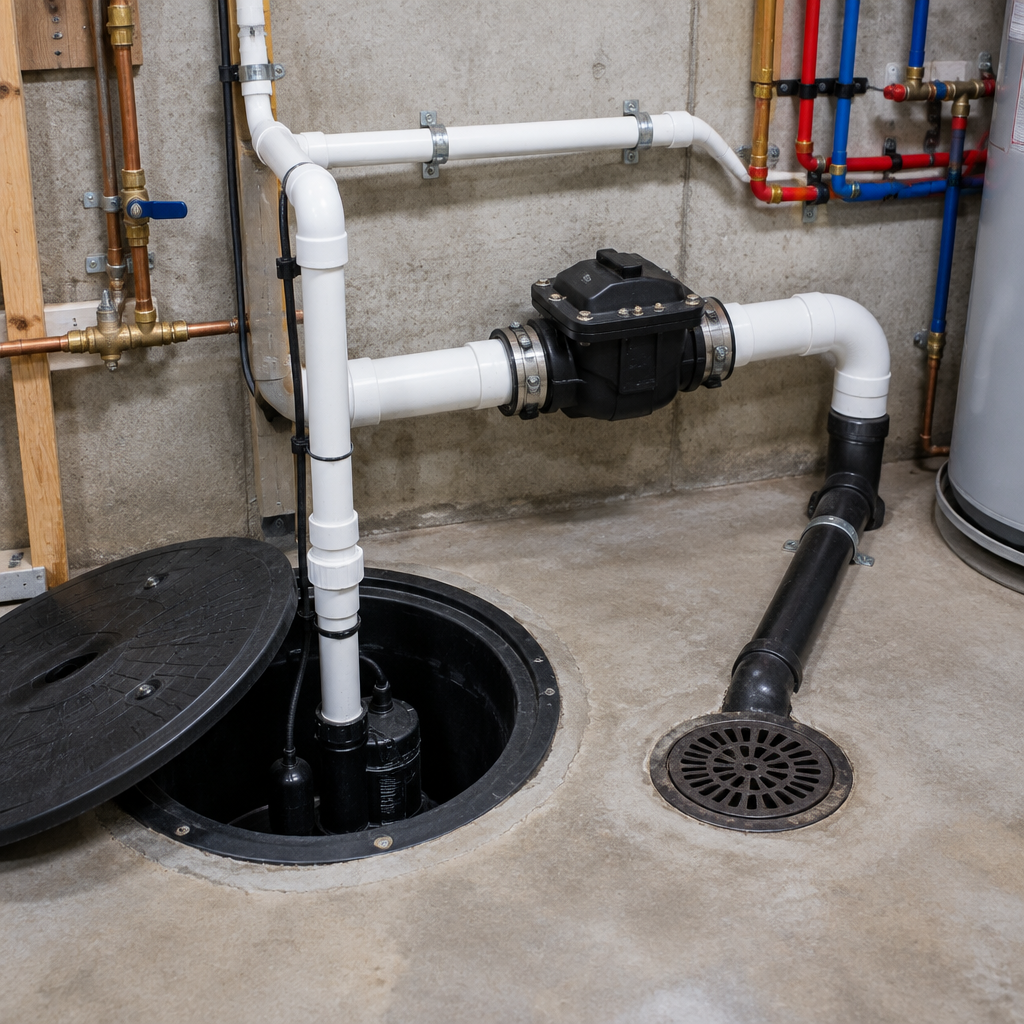
Adding valuable finishes and occupied rooms below grade increases the consequences of sewer backup, pump failure, or surface water entry. A minor unanswered question can become an expensive site problem. With basement suite flood protection plumbing, those questions often concern access, existing damage, product compatibility, or work by another trade. Answering them early reduces risk to both timing and quality.
Assess the existing drainage system
Identify sanitary and storm connections, foundation drains, cleanouts, past flooding, lot grading, and municipal records where relevant. A flood-protection device should respond to the actual risk path.
Coordinate devices with new plumbing
Backwater valves, sump pits, floor drains, ejectors, and new fixtures need compatible layout and access. The design should show what happens when a valve closes or power fails.
Plan alarms and backup
A device that operates silently can be overlooked. High-water alarms, battery backup where appropriate, accessible power, and clear owner instructions improve response during severe weather.
Keep maintenance possible
Valves and pumps require inspection, cleaning, and replacement. Do not bury access under fixed cabinetry, flooring, or tenant storage.
Planning for GTA conditions
Toronto and some other GTA municipalities offer or change flood-protection programs over time. Check current eligibility, permits, approved contractors, and conditions before relying on a rebate. In the GTA, useful local advice goes beyond adding a city name to a quotation. The contractor needs to consider building age, neighbourhood density, local exposure, and the approval path, and how the household will use the finished space.
Questions to settle before pricing
For basement suite flood protection plumbing, the written scope should follow the same path as the work: investigate, prepare, install, inspect, protect, and hand over. Each stage needs a responsible person and a clear decision point. Include site access, occupied areas, weather limits, service interruptions, and communication rules where they apply. Those operational details are often what separate a smooth GTA project from one that looks reasonable on paper but struggles once the crew arrives.
Practical planning checklist
- Document past flooding and existing connections.
- Coordinate all new fixtures with protection devices.
- Plan alarms and power-failure response.
- Keep valves, pits, and cleanouts accessible.
The takeaway
The objective is not to maximize the work sold. The priority is a right-sized scope for basement suite flood protection plumbing, with enough detail to understand the price and judge the result. Flood protection works best when devices, drainage, power, and maintenance are designed together. For an assessment tied to a GTA property, contact My Legal Basement through https://mylegalbasement.ca/.