Legal Second Suite Requirements in GTA: The Complete 2026 Homeowner Checklist
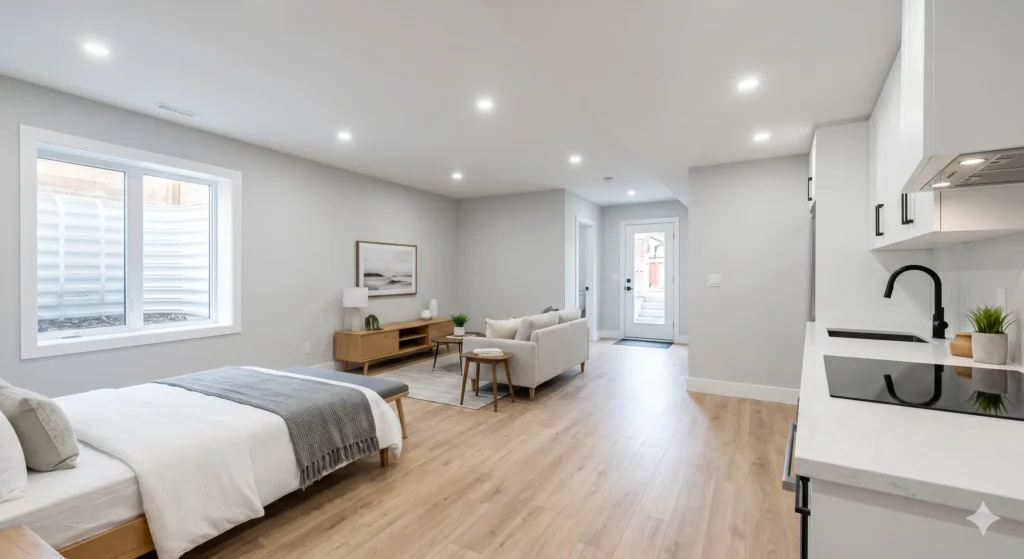
Does Your Basement Actually Qualify as a Legal Suite? Here’s the 2026 Ontario Checklist GTA Homeowners Need
You’ve probably heard the term ‘legal basement suite’ thrown around but do you know what makes a basement actually legal under Ontario’s current building code? In 2026, with municipalities across the GTA cracking down harder on non-compliant units and the rental housing demand at an all-time high, knowing exactly what qualifies your space matters more than ever. Whether you’re starting from scratch or trying to bring an existing finished basement up to code, this checklist is your roadmap.
The Ontario Building Code Requirements for Second Dwelling Units
- Ceiling Height Minimum 6’5″ (1.95m)
This is the requirement that stops many GTA basements from qualifying without modification. The minimum habitable ceiling height for a second unit in Ontario is 6’5″. If your existing basement ceiling runs at 6′ or below, underpinning is required. It’s a significant cost but it’s what separates a permitted legal suite from a technically non-compliant one.
- Separate Entrance
A legal second suite must have its own entrance typically a side door, rear walkout, or below-grade entrance with proper lighting, handrails, and weather protection. The entrance must not pass through the main unit’s living space.
- Egress Windows in Every Bedroom
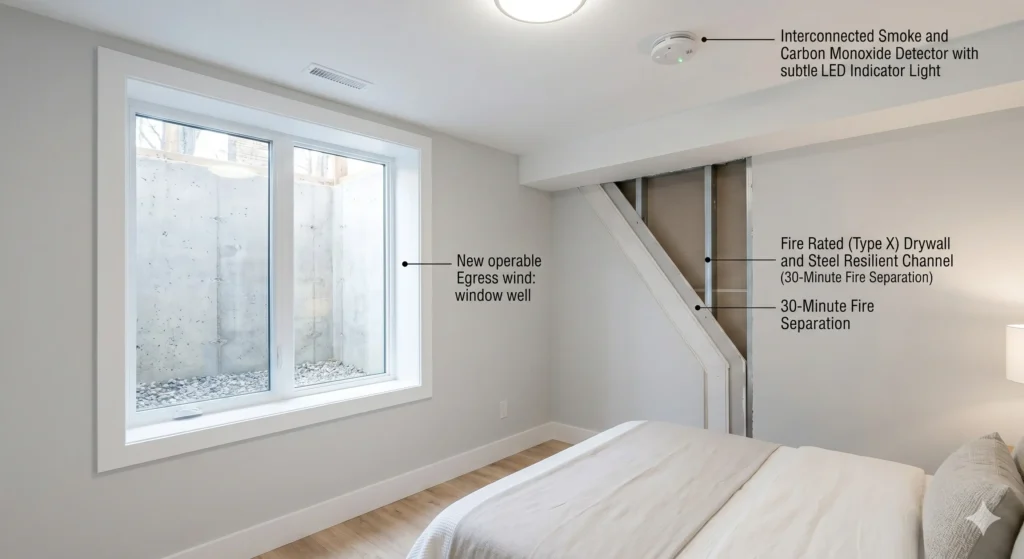
Every bedroom in your basement suite must have an egress window large enough for a person to escape through in an emergency. Minimum opening size under the Ontario Building Code is typically 0.35m² with no dimension less than 380mm. This often requires cutting through concrete walls in older GTA homes.
- Fire Separation Between Units
A legal suite requires proper fire separation typically a 30-minute fire rating between the basement and the main dwelling. This means fire-rated drywall, proper door ratings, and sealed penetrations. Skipping this is both a code violation and a serious safety hazard.
- Full Kitchen Facilities
A self-contained kitchen with sink, fridge, and stove (or stove hookups) is required. The kitchen must have proper ventilation.
- Full Bathroom
Your suite needs its own bathroom toilet, sink, and shower or tub. Shared bathrooms with the main unit disqualify the space as a self-contained legal unit.
- Smoke and Carbon Monoxide Detectors
Code requires interconnected smoke alarms and carbon monoxide detectors on every level and outside every sleeping area in both the main unit and the suite.
- Proper Ventilation and Plumbing
Adequate fresh air circulation, bathroom exhaust ventilation, and properly sized plumbing stack are all required under OBC. Older homes often need plumbing upgrades to handle the additional load.
Zoning and Permissions Know Your Municipality
Beyond the building code, your property must be zoned to allow a second dwelling unit. Most residential zones in Toronto, Mississauga, and Brampton permit second units under current as-of-right zoning rules but there are exceptions. A permit application will confirm zoning compliance. This is another reason having an experienced team handle your application matters they catch zoning issues before you’ve invested in drawings.
What Happens If Your Current Basement Doesn’t Fully Qualify?
It doesn’t mean your project is dead it means there’s work to do. The most common upgrades for GTA basements that need to reach legal status: ceiling height correction via underpinning, egress window installation, separate entrance construction, fire-rating upgrades to walls and ceiling, and electrical panel upgrades. A pre-construction assessment from a qualified contractor tells you exactly what modifications are needed and at what cost.
💡 Related: Read our Basement Renovation Cost Guide for 2026 to understand the full pricing breakdown for each type of modification.
Why Getting This Right in 2026 Matters More Than Ever
GTA municipalities have significantly increased enforcement of second unit compliance since 2024. Proactive permitting is no longer just the ‘right’ thing to do it’s the only financially safe approach. A legal suite adds appraised value to your home, qualifies for landlord insurance, and generates income you can report and protect. An illegal unit is a liability that grows more dangerous every year you keep it.
🏠 Find out if your basement qualifies book a FREE assessment at mylegalbasement.ca or call 437-826-4980. We handle everything from compliance check to full legal build across GTA.